
If you've started Invisalign, you've probably wondered about your aligner schedule. Why do the trays change every two weeks? Understanding the reason helps you stay committed to your plan, and for patients getting Invisalign in Clearwater, the answer comes down to biology, physics, and careful planning. Dr. Jason Kopakin at Boulevard Dental breaks it down.
The Science Behind Tooth Movement
Teeth don't move overnight. They shift gradually in response to consistent, gentle pressure, and each aligner is designed to apply that pressure to specific teeth. Over time, the surrounding bone remodels to support each new position.
In bone remodeling, old bone dissolves on one side of the root while new bone forms on the other. It takes roughly two weeks for this cycle to progress far enough to safely move to the next step, which is exactly why your schedule is built the way it is.
Moving too fast could damage roots or surrounding tissue; moving too slowly would extend treatment unnecessarily. Two weeks strikes the ideal biological balance, and your entire plan is mapped out digitally before you receive your first tray.
Why Two Weeks Is the Sweet Spot
Each aligner moves your teeth about 0.25 millimeters. That sounds tiny, but it adds up across dozens of trays. The two-week interval gives your periodontal ligament, the tissue that connects teeth to bone, time to adapt. Rushing raises the risk of relapse or discomfort.
Patients often ask whether they can switch faster. In some cases, your dentist may approve a shorter interval, but only when teeth have fully expressed their movement. Switching early without that movement is counterproductive.
- Each tray moves teeth approximately 0.25 mm
- The two-week schedule matches natural bone remodeling
- Changing too early can reverse progress
- Wearing aligners 20 to 22 hours a day ensures proper results
- Regular visits confirm your teeth are tracking correctly
Dr. Kopakin monitors your progress throughout treatment. If movement looks good, the next trays continue smoothly; if not, refinements may be recommended.
How Attachments Help
Many patients receive attachments: small, tooth-colored bumps bonded to specific teeth before treatment begins. They give the aligner more surface to grip, enabling more precise or complex movements than a smooth tray could achieve alone.
Attachments are especially useful for rotating teeth or moving them vertically. Think of them as handles the aligner can push and pull against. You'll barely notice them, and they're removed at the end of treatment without lasting marks on your enamel. Some patients also use small elastics alongside their aligners to correct bite issues; your plan is fully customized to your starting alignment.
Refinements and Final Trays
Refinements are additional aligner sets made after your main series to fine-tune any teeth that didn't move exactly as planned. Most patients need at least one round, which is completely normal. Here's the process from start to finish:
- Initial consultation and digital smile scan
- Custom ClinCheck treatment plan reviewed with Dr. Kopakin
- Attachments placed and first aligners delivered
- Trays changed every two weeks as prescribed
- Progress checks every six to eight weeks
- Refinement trays ordered if needed
- Retainers provided to maintain your result
Refinement trays follow the same two-week schedule, targeting the specific teeth that need a little extra encouragement. Dr. Kopakin reviews your scan data at every stage to keep you on track toward a stable, healthy bite.
Caring for Your Aligners Between Changes
Good aligner care protects both your investment and your oral health. Rinse trays every time you remove them, clean them gently with a soft toothbrush and mild soap, and never soak them in hot water, which warps the plastic.
Always brush and floss before putting aligners back in. Food trapped under a tray creates an ideal environment for bacteria, which can lead to cavities or gum irritation.
- Rinse aligners with cool water after removal
- Avoid colored drinks while wearing your trays
- Brush and floss before every reinsertion
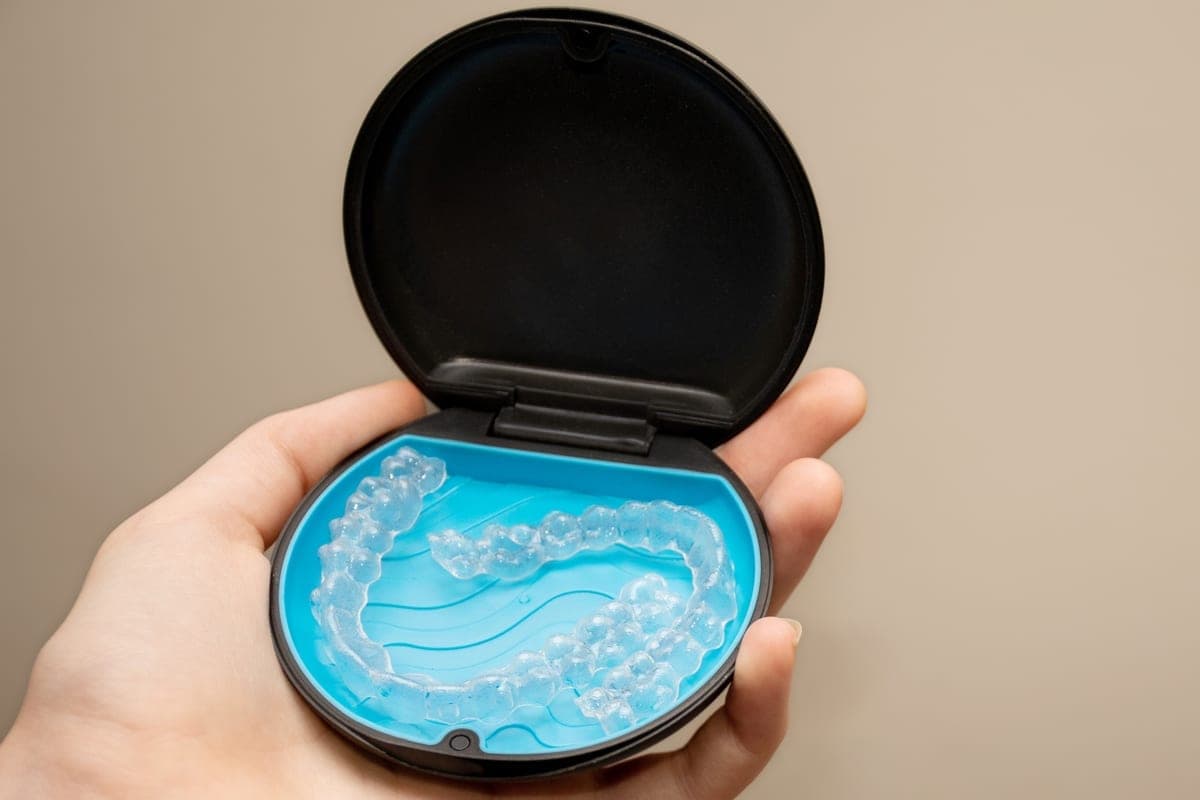
- Store aligners in their case when not in use
- Never wrap trays in a napkin; they're easily thrown away
If a dental emergency comes up during treatment, don't panic. Call our office right away, and our emergency dentistry team will help.
Every Tray Is a Step Forward
Once you understand the two-week schedule, your Invisalign journey gets easier. Each tray is one precise step toward your ideal smile, with bone remodeling, attachments, and refinements all working together. Dr. Kopakin, who is trained in Invisalign, and our team will guide you through every stage.